General
Resell Parts vs Whole Broken Device: Max Your Profit
Wondering if you should resell parts vs whole broken device? Discover strategies to maximize your profit and make smart sales decisions!
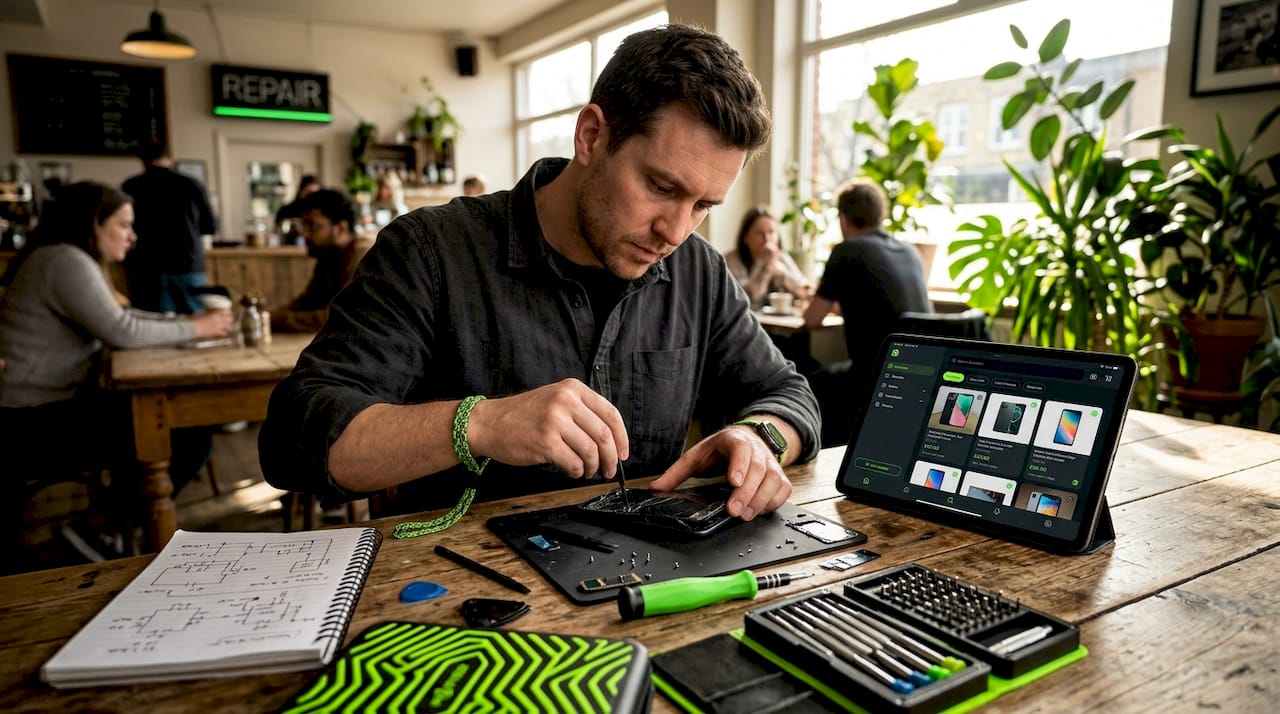
Resell Parts vs Whole Broken Device: Max Your Profit
You have a broken device sitting in a drawer and you want cash for it. The real question is whether to resell parts vs whole broken device as a single unit, because that decision alone can mean the difference between $40 and $200 in your pocket. The answer is not the same for every device, every seller, or every situation. Device condition, your available time, the specific model, and where you plan to sell all factor into which path actually pays more. This guide breaks down both options with real numbers and practical steps so you can make the call that maximizes your return.
Table of Contents
- Key takeaways
- Resell parts vs whole broken device: know your starting point
- How to part out a broken device
- Whole unit vs parts: the honest comparison
- Finding the right buyers and platforms
- My take on the parts vs whole decision
- Sell your broken device on BrokenBuys
- FAQ
Key takeaways
| Point | Details |
|---|---|
| Condition drives strategy | Device damage severity determines whether parts or whole-unit sale yields more money. |
| Parts can pay more, but cost time | Parting out a device can double your return, but requires tools, testing, and patience to sell individual components. |
| Repair costs matter | If repair costs exceed 40-60% of device value, selling broken almost always beats fixing it first. |
| Platform choice is critical | Specialized broken-device marketplaces consistently outperform general classifieds for both whole units and parts. |
| Know your harvest threshold | Older or less popular models may not justify the labor of dismantling. Sell whole when the math does not work. |
Resell parts vs whole broken device: know your starting point
Before you list anything, you need an honest assessment of what you actually have. Skipping this step is how sellers leave money on the table.
Start by categorizing the damage:
- Cosmetic damage only. Cracked back glass, scuffs, dents. The device still powers on and functions normally.
- Functional damage. Cracked screen with touch issues, dead battery, broken charging port, water damage with partial function.
- Total failure. Won’t power on, logic board failure, severe water damage, missing components.
That category changes everything. A device with cosmetic damage only typically loses 15% to 40% of its resale value compared to a clean working unit. That means a $400 phone with cracked back glass might fetch $240 to $340 as a whole unit. That is still real money without any disassembly work.
Total failures are a different story. A device that will not power on has almost no value as a whole unit to a regular consumer. But to a repair technician, that same device is a parts bin. The screen, battery, cameras, and logic board each carry independent value in the secondary market.
Next, research your specific model. A cracked iPhone 15 Pro screen is worth significantly more as a standalone part than a cracked screen from a five-year-old budget Android. Demand for components is model-specific and changes constantly. Check completed listings on parts-focused platforms to see what individual components are actually selling for, not just what sellers are asking.
Pro Tip: If you are unsure whether your device is worth parting out, price the three most valuable components first: the screen assembly, the battery, and the main board. If those three items together exceed what you would get for the whole broken unit, parting out is worth considering.
Repair feasibility also plays into your decision. Devices with minor, isolated damage like a cracked screen or dead battery are sometimes worth repairing before selling, because a working unit commands a significantly higher price. But if repair costs exceed 40-60% of the device’s current market value, or the model is over five years old, selling it broken almost always beats paying for repairs.
How to part out a broken device
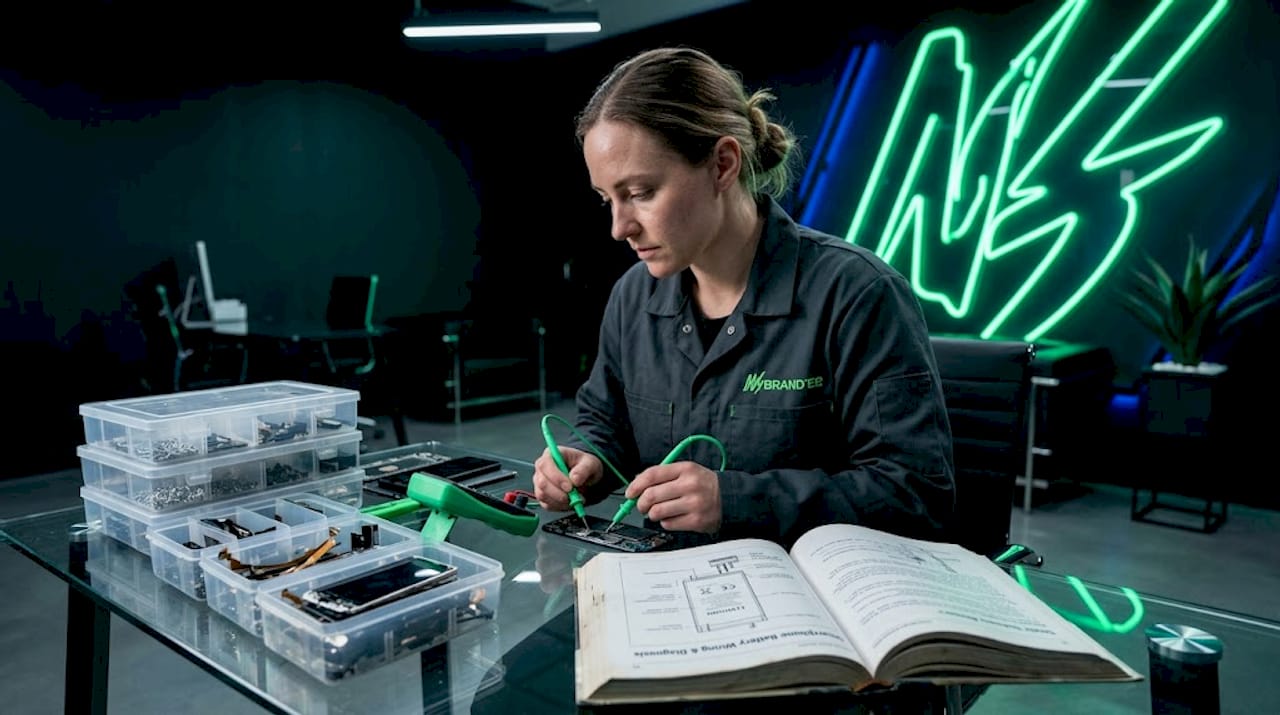
Dismantling a device to sell parts separately is not complicated, but it does require the right approach. Doing it wrong can damage components that still have value.
Here is a practical process to follow:
- Gather your tools. Most smartphones and tablets require a pentalobe screwdriver, Phillips head screwdriver, plastic spudgers, and suction cups. Laptops and gaming consoles often need Torx bits. iFixit sells complete kits for under $30 and their repair guides are free.
- Follow a teardown guide. Never open a device blind. iFixit and YouTube have model-specific teardown videos. Watch the full video before touching the device.
- Test components before removing them. If the device powers on at all, test the screen, cameras, speakers, and buttons before disassembly. Documented working components sell for more.
- Remove and label everything. Use small zip-lock bags labeled with the component name and model number. Mixing up screws or losing small parts reduces the value of what you are selling.
- Photograph each component. Clear photos showing the condition of each part build buyer confidence and reduce disputes.
- Store parts safely. Anti-static bags protect logic boards and chips. Keep screens flat and protected from pressure.
Here is a realistic breakdown of component values for a water-damaged iPhone 14 with a cracked screen:
| Component | Estimated resale value | Condition notes |
|---|---|---|
| Screen assembly (cracked) | $15 to $30 | Cracked but functional touch |
| Screen assembly (working) | $60 to $90 | Undamaged, tested working |
| Battery (tested good) | $10 to $20 | Holds charge above 80% |
| Rear camera module | $25 to $45 | Tested, no damage |
| Logic board (powers on) | $80 to $150 | Highest value component |
| Housing and frame | $8 to $18 | Cosmetic condition dependent |
The time investment is real. Expect two to four hours for a full teardown, testing, photographing, and listing individual parts. That time cost matters. Extracting high-value components like logic boards or proprietary screens yields the most profit. Generic or commonly failed parts may not justify the extraction effort at all.
Pro Tip: Sell logic boards and screen assemblies first. These are the components repair techs actively search for. Once those sell, decide whether the remaining parts are worth listing individually or bundling as a “remaining parts lot.”
Whole unit vs parts: the honest comparison
This is where most sellers get stuck. Here is the direct breakdown.
When selling the whole broken device wins
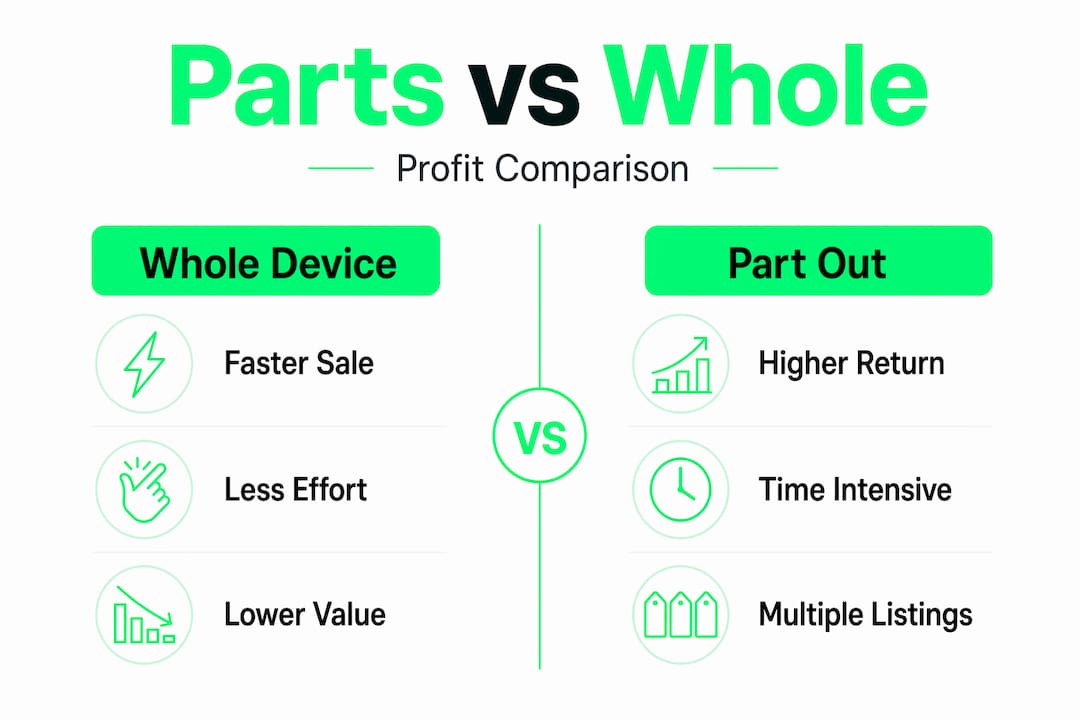
Speed is the biggest advantage. A whole broken device lists in minutes and attracts buyers who want to repair or flip it themselves. You handle one transaction, one shipment, one buyer. For sellers who value their time, that simplicity has real monetary value.
Whole-unit sales also work better for devices in better condition. A phone with a cracked screen that still powers on fully has strong demand from repair shops and flippers. Specialized online buyers consistently pay significantly more than local retailers for broken units because they have the infrastructure to assess and resell them. A broken PS5, for example, might fetch $210 from a specialized online buyer versus $65 at a local shop.
The whole-unit approach also makes sense when a device is a popular model in high demand. Repair techs and refurbishers want complete units they can diagnose and fix. They pay a premium for that convenience.
When parting out wins
The math on parts can be compelling. Just as individual vehicle parts often hold more cumulative value than the whole broken vehicle, the same logic applies to electronics. A device that would sell whole for $80 might yield $180 to $220 when parted out carefully.
Parts sales win most clearly in these situations:
- The device has total failure and will not power on, making it unattractive as a whole unit
- The model is popular enough that individual components have strong, documented demand
- You have the tools, time, and basic technical comfort to disassemble safely
- The device contains one extremely high-value component, like a working OLED display or a functioning logic board from a premium model
The risk with parting out is unsold inventory. You might sell the logic board in two days and sit on the housing and battery for two months. Factor that into your calculation.
The harvest yield threshold
Labor cost versus component value is the key calculation. If the total estimated parts value minus your time cost does not significantly exceed the whole-unit price, sell it whole. Older models and less popular brands hit this threshold fast. A five-year-old mid-range Android is almost always better sold whole because individual part demand is thin and prices are low.
Markets increasingly treat devices as platforms hosting high-value components that command prices exceeding the intact unit at end of life. That trend favors parting out premium devices. It does not apply equally to every device on the market.
Finding the right buyers and platforms
Where you sell matters as much as what you sell. The wrong platform costs you real money.
For whole broken devices, dedicated broken-electronics marketplaces consistently outperform general classifieds. General platforms bury broken listings under thousands of working units, and buyers there are often consumers who do not understand what a broken device is worth to a repair tech. A broken MacBook listed on a general platform might sit for weeks. The same listing on a platform built for broken electronics reaches repair shops and flippers actively looking for exactly that device.
For parts, the buyer pool is narrower but highly motivated. Repair technicians know exactly what they need and will pay fair prices for tested, documented components. Specialized regional buyers sometimes pay more than national aggregators because their logistics costs are lower and they have direct local demand.
Here are the key factors to optimize your listing regardless of platform:
- Be specific about damage. Vague listings get lowball offers. State exactly what is broken, what works, and what you have tested.
- Include photos of everything. Front, back, ports, damage close-ups, and any visible water indicators.
- State the model number, storage capacity, and carrier lock status for phones and tablets.
- Price based on completed sales, not active listings. Active listings show what people are asking. Completed sales show what buyers actually paid.
- Use secure payment methods. Escrow-based transactions protect both parties and reduce the risk of fraud, which is a real concern in the broken electronics market.
Trade-in programs from carriers and manufacturers are fast but almost always pay the least. They are designed for convenience, not maximum return. If you want real money for a broken device, you need a buyer who understands its actual value.
My take on the parts vs whole decision
I have watched a lot of sellers overcomplicate this. They spend hours researching parts prices, watch three teardown videos, and then decide to sell the whole device anyway because the math did not work out. That is not wasted time. That is the right process.
What I have found is that most sellers overestimate how much their individual parts will sell for and underestimate how long it takes to move them. A logic board from a popular iPhone model will sell fast. The rear housing from the same phone might sit in a drawer for six months. You need to account for that when you are doing your calculation.
My honest advice: if you are not comfortable with basic disassembly and you have never sold parts before, start by selling the whole device. Get comfortable with the market, understand what buyers are looking for, and then try parting out your next broken device once you know what you are doing. The learning curve is real, and a botched disassembly can destroy the most valuable component in the device.
The other thing I push back on is the idea that maximum theoretical profit is always the goal. Sometimes a fast, clean $120 sale beats a complicated $180 parts-out process that takes three weeks and four separate shipments. Your time has value. Factor it in honestly.
— Ryan
Sell your broken device on BrokenBuys
Whether you decide to sell the whole unit or list individual parts, you need buyers who actually understand what broken electronics are worth. That is exactly who shops on BrokenBuys.
BrokenBuys is the only dedicated marketplace built specifically for broken, damaged, and salvage electronics and gaming hardware. Repair technicians, parts hunters, refurbishers, and flippers shop there daily looking for exactly what you have. Listings are not buried under thousands of working devices. Secure escrow payments protect every transaction. You can ship nationally or sell locally. Every condition is accepted, from cracked screen iPhones and water-damaged laptops to broken PS5s and Nintendo Switch consoles that will not power on. If you have a broken device and want real money for it, BrokenBuys is where serious buyers are waiting.
FAQ
Is it better to sell a broken phone whole or in parts?
It depends on the device model and damage type. Popular premium models with total failure often yield more when parted out, while devices with minor damage sell faster and more profitably as whole units to repair shops and flippers.
What parts of a broken phone are worth the most?
The logic board, screen assembly, and rear camera module typically carry the highest resale value. For premium models, a working logic board alone can be worth more than the entire broken device sold as a whole unit.
How do I know if parting out my device is worth the effort?
Price the three most valuable components individually and compare that total to what the whole broken device would sell for. If the parts total does not significantly exceed the whole-unit price after accounting for your time, sell it whole.
Where is the best place to sell broken electronics?
Dedicated broken-electronics marketplaces connect you directly with repair techs and parts buyers who understand real component value. General classifieds and carrier trade-in programs almost always pay less because their buyer pools are not specialized.
Does device age affect whether I should part it out?
Yes. Older and less popular models hit the harvest yield threshold quickly, meaning labor costs eat into any parts premium. Devices over five years old or from less popular brands are usually better sold as complete broken units.